


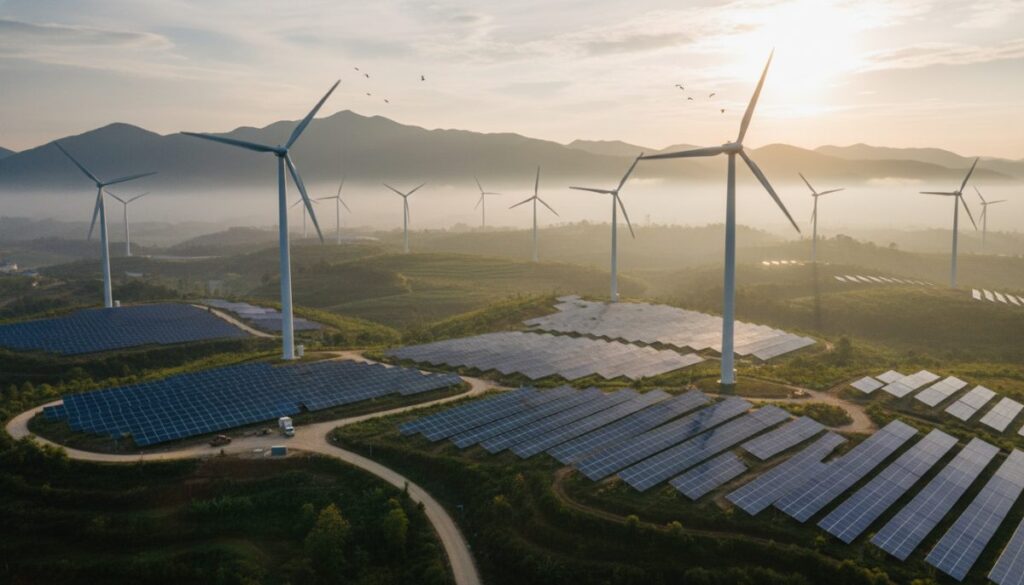
Amid growing global concerns about climate change and rising energy demand, Vietnam has demonstrated a strong commitment to transitioning toward cleaner and more sustainable energy sources. With abundant natural resources, particularly solar and wind energy, the country is emerging as one of Southeast Asia’s leading renewable energy markets. This remarkable growth not only strengthens national energy security but also creates significant opportunities for sustainable economic development.
Solar Power: Rapid Growth and Technological Innovation
Solar energy has become one of the key pillars of Vietnam’s renewable energy sector. In just a few years, the country has witnessed a remarkable expansion of solar projects, ranging from residential rooftop installations to large-scale solar farms. This growth has been driven by supportive government policies, particularly the Feed-in Tariff (FIT) mechanism, which has provided strong incentives for investors.
High-Efficiency Solar Panel Technologies
Advanced solar technologies such as PERC (Passivated Emitter and Rear Cell), Half-Cut Cells, and Bifacial Modules are increasingly being adopted across Vietnam. These technologies improve photovoltaic conversion efficiency, enabling greater electricity generation from the same installation area while maintaining strong performance under low-light conditions and high temperatures.
In addition, the integration of solar tracking systems allows panels to follow the sun’s movement throughout the day, maximizing solar energy capture and improving overall system productivity.
Rooftop Solar and Energy Storage Systems
Rooftop solar has become a popular solution for households, businesses, and industrial facilities, helping reduce pressure on the national power grid while lowering electricity costs. Alongside this trend, lithium-ion battery storage technology is being gradually deployed to address the intermittent nature of solar energy and provide a more reliable electricity supply, especially during peak demand periods or when sunlight is unavailable.
Wind Power: Harnessing the Potential of Vietnam’s Extensive Coastline
With a coastline stretching over 3,260 kilometers and diverse geographical conditions, Vietnam possesses tremendous wind energy potential both onshore and offshore. Wind power has emerged as a critical renewable energy source, attracting significant domestic and international investment.
Modern Wind Turbine Technologies
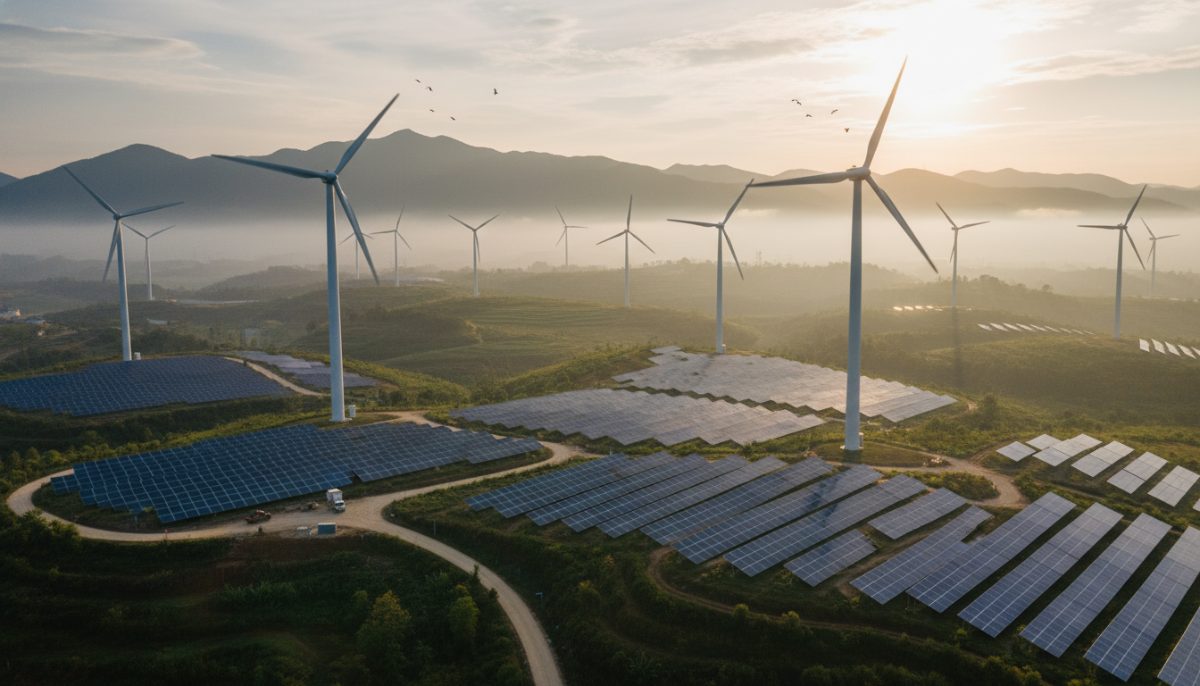
Wind power projects in Vietnam are increasingly utilizing the latest generations of wind turbines, featuring larger capacities, taller towers, and wider rotor diameters. These advancements allow turbines to operate more efficiently in areas with moderate wind speeds while generating greater amounts of electricity.
Moreover, intelligent control systems and remote monitoring technologies help optimize wind farm operations, reducing maintenance costs and improving overall efficiency.
Offshore Wind Power: A Strategic Direction
Offshore wind energy is widely regarded as a strategic opportunity for Vietnam due to its stronger and more consistent wind resources compared to onshore locations. Although offshore projects require higher initial investments and more complex technologies, including specialized foundations and subsea transmission systems, they offer the potential to deliver large-scale, stable electricity generation.
Offshore wind development is expected to play a vital role in helping Vietnam achieve its carbon reduction goals while strengthening long-term energy security. Several large-scale offshore wind projects are currently under study and development, with the potential to significantly reshape the country’s future energy mix.
Other Renewable Energy Technologies and Policy Support
In addition to solar and wind energy, Vietnam is actively exploring and developing other renewable energy sources, including biomass energy from agricultural by-products, small-scale hydropower, and waste-to-energy technologies. Although these sectors currently operate on a smaller scale, they contribute to diversifying the national energy supply and maximizing the use of available resources.
The success of Vietnam’s renewable energy sector would not be possible without strong government support. Through regulatory frameworks, incentive programs, and long-term development planning, the government has created favorable conditions for industry growth.
Power Development Plan VIII (PDP VIII) sets ambitious targets for increasing the share of renewable energy in the national electricity mix, demonstrating Vietnam’s commitment to a green energy transition. Competitive bidding mechanisms, smart grid development, and support for energy storage technologies represent the next important steps toward ensuring the sustainable growth of the renewable energy sector.
Conclusion
Vietnam is on track to become a model for renewable energy development both within the region and globally. Supported by abundant natural resources, advanced technologies, and effective government policies, solar and wind energy are leading the country’s green energy transformation.
Technological innovations are not only improving efficiency and reliability but are also opening new possibilities for harnessing clean energy resources. This journey contributes not only to environmental protection but also to building a sustainable, resilient, and prosperous energy future for Vietnam.